
👨🏻⚖️ Successful Case Denying Employee Status of the CEO of a Korean Subsidiary of a China-Based Parent Company
✅1. Case Overview
This case concerns a former CEO of a Korean subsidiary established by a company headquartered in China, who, after resigning from his executive position, filed a claim asserting that he should be recognized as an employee under the Labor Standards Act.
The Korean subsidiary operated under the investment and governance structure of its Chinese parent company. The claimant held the position of CEO of the Korean entity and was responsible for overseeing the overall management and operations of the company.
After resigning from his registered executive position, the claimant asserted employee status. However, the company argued that, in substance, he continued to exercise managerial control and therefore should be regarded as being in the position of an employer rather than an employee.
✅2. Key Issues
The central issue in this case was as follows:
Whether the CEO of a domestic subsidiary within a foreign corporate structure qualifies as an employee under the Labor Standards Act.
In particular, the following factors played a crucial role in the determination:
✔ The governance structure between the Chinese parent company and the Korean subsidiary
✔ Whether the domestic CEO exercised independent managerial authority
✔ Whether the claimant retained substantive authority even after formal resignation
Since the determination of employee status is based on the substance of the relationship rather than its formal designation, even within a foreign corporate structure, a CEO who independently conducts management activities is not recognized as an employee.
✅3. Strategy by Attorney Musong Kim
In this case, Attorney Musong Kim developed a strategy centered on the structure of the foreign-invested company and the claimant’s substantive position as CEO.
First, it was emphasized that even after resigning as an executive, the claimant:
✔ Directly exercised personnel authority as the representative of the Korean subsidiary
✔ Issued work instructions to employees and performed management and supervisory functions
✔ Independently made key business decisions of the company
In particular, the following points were highlighted:
✔ Despite being under a China-based corporate structure, the CEO of the Korean subsidiary exercised independent managerial authority
✔ The claimant performed duties autonomously without control over working hours or workplace
✔ He led overall management without any obligation to report to a superior
These factors demonstrated that there was no relationship of direction or supervision from an employer.
Furthermore, it was emphasized that the compensation and treatment were structured not as wages for an employee, but as remuneration corresponding to a managerial position, thereby clarifying that such payments were consideration for management activities rather than wages.
✅4. Outcome
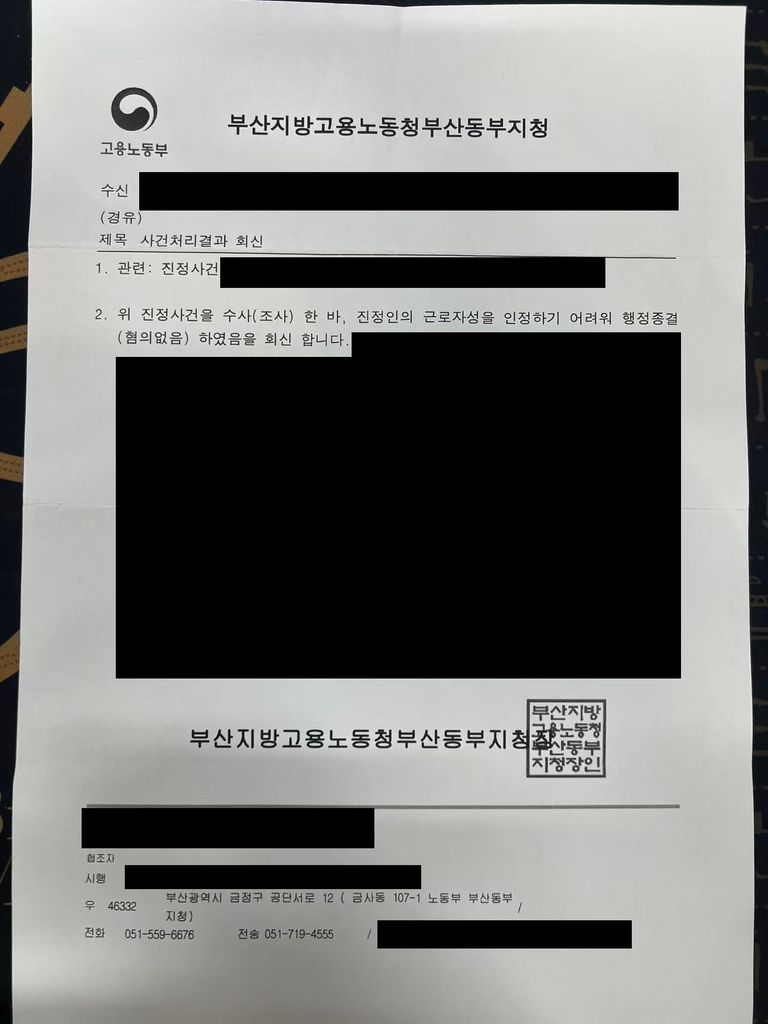
As a result, the claimant’s assertion was not accepted, and it was determined that he did not qualify as an employee under the Labor Standards Act.
In particular, despite the structural characteristic of being a Korean subsidiary of a China-based foreign company, it was recognized that the domestic CEO had exercised independent managerial authority in substance, leading to the denial of employee status.
로톡의 모든 콘텐츠는 저작권법의 보호를 받습니다.
콘텐츠 내용에 대한 무단 복제 및 전재를 금지하며, 위반 시 민형사상 책임을 질 수 있습니다.